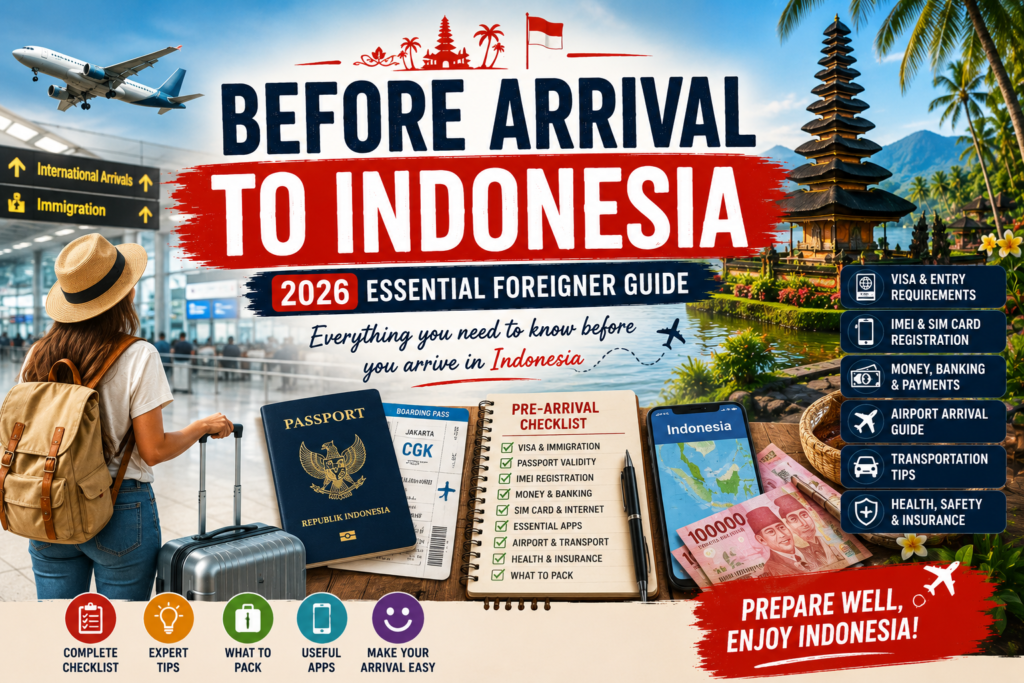
Preparing for a trip to Indonesia requires more than just booking flights and hotels. This 2026 complete foreigner guide explains everything travelers need to know before arrival to Indonesia — from visa requirements and vaccinations to customs rules, money tips, and cultural etiquette.
Table of Contents
Overview: Before Arrival to Indonesia
Indonesia is a vast archipelago of over 17,000 islands, offering diverse cultures, landscapes, and experiences. Before arrival to Indonesia, travelers should prepare essential documents, understand visa options, and learn basic local customs to ensure a smooth entry and enjoyable stay.
Visa and Entry Requirements
1. Visa-Free Entry
Citizens of ASEAN countries can enter Indonesia visa-free for up to 30 days for tourism purposes. This visa cannot be extended.
2. Visa on Arrival (VOA)
Citizens from over 90 countries can obtain a Visa on Arrival valid for 30 days, extendable once for another 30 days.
Read the full guide: Indonesia Visa on Arrival (2026)
3. eVisa Options
Travelers can apply for an Electronic Visa (eVisa) before traveling. The Tourist eVisa C1 allows stays of up to 60 days, extendable twice.
Learn more: How to Extend Indonesia Tourist eVisa C1
4. Passport Validity
Passports must be valid for at least 6 months from the date of entry, with at least one blank page for the entry stamp.
Travel Documents Checklist
Before arrival to Indonesia, ensure the following documents are ready:
- Valid passport (6+ months validity)
- Visa or eVisa (if required)
- Return or onward flight ticket
- Proof of accommodation (hotel booking or host address)
- Travel insurance certificate
- Vaccination records (if applicable)
- Emergency contact information
Keep both digital and printed copies of all documents.
For more details, Please checkout the official Indonesian immigration website
Vaccinations and Health Requirements
Indonesia does not require most travelers to show vaccination proof, but the following are recommended:
- Hepatitis A and B
- Typhoid
- Tetanus
- Rabies (for rural or long-term stays)
- COVID-19 vaccination (recommended for all travelers)
Mosquito-borne diseases like dengue and malaria exist in some regions. Bring insect repellent and consult a travel clinic before departure.
Travel Insurance and Safety
Comprehensive travel insurance is essential before arrival to Indonesia. It should cover:
- Medical emergencies and evacuation
- Trip cancellations or delays
- Lost luggage or theft
- Motorbike accidents (if renting a scooter)
Indonesia is generally safe, but petty theft can occur in crowded areas. Keep valuables secure and avoid carrying large amounts of cash.
Currency, Money, and Payments
The official currency is the Indonesian Rupiah (IDR).
Before arrival to Indonesia:
- Exchange a small amount of cash for immediate expenses.
- Use authorized money changers or ATMs inside banks.
- Avoid exchanging money at airports with poor rates.
Payment tips:
- Credit cards are accepted in major cities and hotels.
- Cash is preferred in rural areas and small shops.
- Mobile payments like GoPay and OVO are widely used.
Customs Regulations and Restricted Items
Travelers should be aware of customs rules before arrival to Indonesia:
Duty-Free Allowances:
- 200 cigarettes or 50 cigars or 100g of tobacco
- 1 liter of alcohol
- Personal items and gifts up to USD 500 in value
Prohibited Items:
- Drugs and narcotics (strictly illegal)
- Pornographic materials
- Weapons or explosives
- Fresh fruits, plants, or animal products without permits
Declare valuable electronics or large sums of cash (over USD 10,000).
Cultural Etiquette and Local Customs
Understanding local etiquette before arrival to Indonesia helps avoid misunderstandings:
- Dress modestly when visiting temples or rural areas.
- Remove shoes before entering homes or religious sites.
- Use the right hand for giving or receiving items.
- Avoid public displays of affection in conservative regions.
- Respect local traditions and avoid criticizing religion or politics.
Learning a few Bahasa Indonesia phrases like terima kasih (thank you) and tolong (please) goes a long way.
Connectivity and SIM Cards
Stay connected easily after arrival:
- Buy a local SIM card from providers like Telkomsel, XL Axiata, or Indosat.
- SIM cards are available at airports and convenience stores.
- Register your SIM with your passport.
- Use eSIMs for short stays or multiple destinations.
Free Wi-Fi is common in hotels, cafes, and airports.
Transportation and Airport Tips
Before arrival to Indonesia, plan your airport transfer and local transport:
- Use official taxi counters or apps like Grab and Bluebird.
- Avoid unlicensed drivers offering rides inside terminals.
- Domestic flights connect major islands; book early for best prices.
- Ferries and fast boats operate between Bali, Lombok, and nearby islands.
Traffic can be heavy in big cities, so plan extra time for transfers.
Accommodation and Booking Tips
- Book hotels or guesthouses through trusted platforms like Booking.com or Agoda.
- Check reviews and cancellation policies.
- In Bali and Lombok, villas and homestays are popular options.
- Always confirm check-in times and airport pickup arrangements.
Emergency Contacts and Useful Apps
Emergency Numbers:
- Police: 110
- Ambulance: 118
- Fire Department: 113
- Tourist Police (Bali): +62 361 224111
Useful Apps:
- Grab / Gojek – transport and food delivery
- Google Translate – language assistance
- Traveloka – flight and hotel booking
- XE Currency – exchange rate tracking
- WhatsApp – main communication tool in Indonesia
Frequently Asked Questions (FAQ)
1. What should I prepare before arrival to Indonesia?
A valid passport, visa (if required), return ticket, and travel insurance.
2. Do I need vaccinations before traveling to Indonesia?
Vaccinations for Hepatitis A, Typhoid, and Tetanus are recommended.
3. Can I bring alcohol or cigarettes into Indonesia?
Yes, within duty-free limits (1 liter of alcohol, 200 cigarettes).
4. Is it safe to travel alone in Indonesia?
Yes, but stay alert in crowded areas and use official transport.
5. Can I use my phone in Indonesia?
Yes, buy a local SIM card or use an eSIM for data and calls.
6. What currency should I bring?
Bring USD or EUR for exchange; use ATMs for local cash withdrawals.
Final Thoughts
Preparing well before arrival to Indonesia ensures a smooth and enjoyable trip. From understanding visa rules to respecting local customs, a little preparation goes a long way. With the right documents, insurance, and awareness, travelers can explore Indonesia’s islands confidently and safely.
To explore more, Visit the YouTube Channel Living Indonesia Official – YouTube
Book cheap flights, hotels ferries, trains, taxi at 12GO