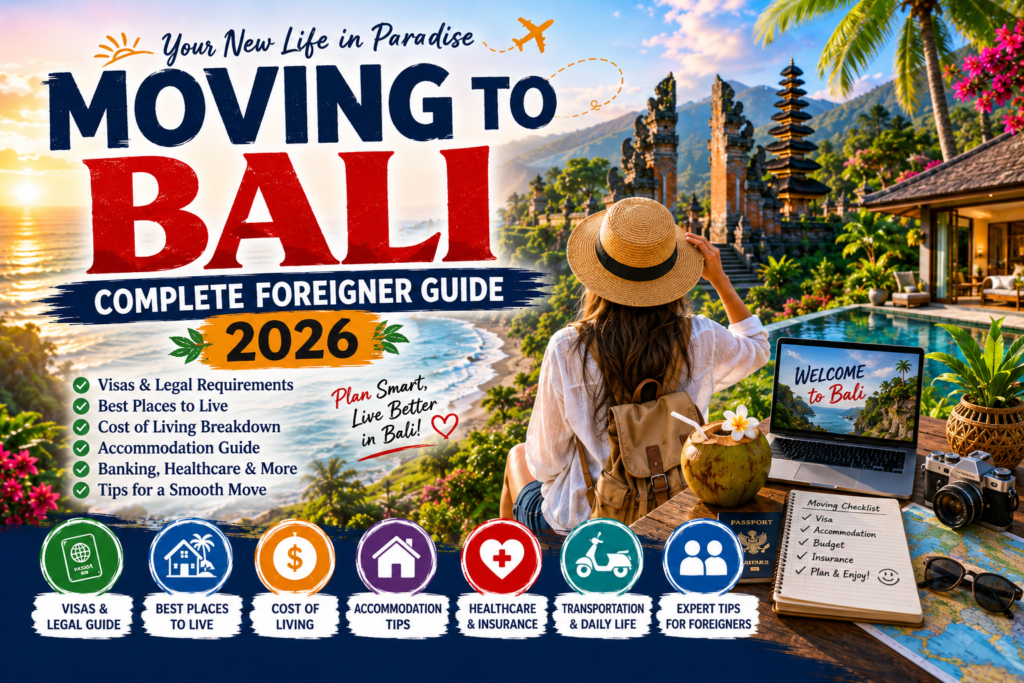
Moving to Bali is a dream for many foreigners seeking a tropical lifestyle, affordable living, and a vibrant international community. Whether relocating for remote work, retirement, or a lifestyle change, understanding the practical steps and legal requirements is essential for a smooth transition.
This 2026 guide explains everything foreigners need to know before moving to Bali — from visas and housing to healthcare, cost of living, and cultural adaptation.
📌 Key Takeaways
- Choose the right visa before arriving (tourist, social, or KITAS)
- Budget USD 1,200–3,000 per month for comfortable living
- Rent short-term first, then find long-term housing locally
- Get international health insurance before arrival
- Learn basic Bahasa Indonesia for daily life
Why Move to Bali?
Bali offers a unique mix of natural beauty, modern amenities, and a welcoming expat community. The island’s appeal lies in its balance between tropical serenity and digital connectivity.
Top reasons foreigners move to Bali:
- Warm climate year-round
- Affordable cost of living
- Thriving digital nomad scene
- Diverse food and culture
- Easy access to beaches, mountains, and rice fields
Step 1: Choose the Right Visa for Bali
Foreigners must enter Indonesia with the correct visa type. The right choice depends on the purpose and duration of stay.
1. Visa on Arrival (VOA)
Best for: Short stays or initial visits
Duration: 30 days, extendable once for another 30 days
Cost: Around USD 35
Where to apply: At Ngurah Rai International Airport
2. B211A Visit Visa (Social or Business)
Best for: Medium-term stays (up to 6 months)
Duration: 60 days, extendable up to 180 days
Requirements: Sponsorship letter, return ticket, proof of funds
3. KITAS (Temporary Stay Permit)
Best for: Long-term residents, remote workers, retirees, or investors
Types:
- Work KITAS
- Investor KITAS
- Retirement KITAS
- Digital Nomad KITAS (expected 2026 rollout)
4. Retirement Visa
Eligibility: Age 55+, proof of pension or savings, local staff employment
Duration: 1 year, renewable annually
For official visa details, visit www.imigrasi.go.id.
Step 2: Plan the Move
Preparation is key to a stress-free relocation.
Create a Moving Checklist
- Valid passport (minimum 6 months validity)
- Visa approval or sponsor documents
- Travel insurance and health coverage
- International driver’s license
- Copies of important documents (digital + printed)
- Emergency funds in USD or IDR
Shipping Belongings
Most foreigners travel light and buy furniture locally. For larger moves, use international shipping companies such as Seven Seas Worldwide or Asian Tigers.
Tip: Import taxes can be high; consider selling bulky items before moving.
Step 3: Find Accommodation
Start with short-term accommodation for 1–2 weeks while exploring neighborhoods.
Popular areas for foreigners:
- Canggu: Digital nomads, cafes, coworking spaces
- Ubud: Nature, wellness, yoga retreats
- Sanur: Families, retirees, calm beaches
- Uluwatu: Surfers, quiet lifestyle
- Seminyak: Shopping, nightlife, luxury villas
For detailed housing advice, see Long-Term Rentals in Bali (2026 Guide) on livingindonesia.com.
Step 4: Understand the Cost of Living
Bali remains affordable compared to Western countries, though prices vary by area and lifestyle.
| Category | Average Monthly Cost (USD) |
|---|---|
| Accommodation | 600–1,500 |
| Food & Dining | 300–600 |
| Transportation | 100–250 |
| Health Insurance | 50–150 |
| Coworking & Internet | 50–100 |
| Leisure & Fitness | 100–200 |
| Total (Comfortable Lifestyle) | 1,200–3,000 |
For a full breakdown, see Cost of Living in Bali (2026 Guide) on livingindonesia.com.
Step 5: Healthcare and Insurance
Bali has both local clinics and international-standard hospitals.
Recommended hospitals:
- BIMC Hospital (Kuta, Nusa Dua)
- Siloam Hospital (Denpasar)
- Kasih Ibu Hospital (Sanur)
Health insurance options:
- SafetyWing (digital nomads)
- Cigna Global
- Allianz Worldwide
Always carry travel or international health insurance before arrival.
Step 6: Transportation in Bali
Most foreigners use scooters for daily travel.
Options:
- Scooter rental: USD 60–100/month
- Car rental: USD 400–800/month
- Ride-hailing apps: Gojek and Grab
Requirements:
- International driver’s license
- Helmet (mandatory)
- Local SIM card for navigation
For details, see How to Rent a Scooter in Bali (2026 Guide) on livingindonesia.com.
Step 7: Banking and Money
Indonesia’s currency is the Indonesian Rupiah (IDR).
Banking options for foreigners:
- BCA
- Mandiri
- BNI
- Permata Bank
Tips:
- Open a local account with a KITAS visa
- Use Wise or Revolut for international transfers
- ATMs are widely available but have withdrawal limits
Step 8: Working and Remote Jobs
Bali is a global hub for remote workers and entrepreneurs.
Popular coworking spaces:
- Dojo Bali (Canggu)
- Outpost (Ubud, Canggu)
- Tropical Nomad (Canggu)
Internet speed: 50–200 Mbps in most areas
Work visa: Required for employment with Indonesian companies
Step 9: Cultural Etiquette and Local Life
Balinese culture is deeply spiritual and community-oriented.
Cultural tips:
- Dress modestly in temples
- Avoid public displays of anger
- Learn basic Bahasa Indonesia phrases
- Respect local ceremonies and offerings
- Remove shoes before entering homes
Common phrases:
- Terima kasih – Thank you
- Selamat pagi – Good morning
- Berapa harganya? – How much is it?
Step 10: Staying Long-Term
To stay beyond six months, apply for a KITAS or Retirement Visa.
Requirements:
- Valid passport
- Proof of income or investment
- Local sponsor or agent
- Health insurance
Renewals are typically processed through local immigration offices in Denpasar or Jimbaran.
Common Challenges for Foreigners
- Visa extensions and bureaucracy
- Traffic congestion in tourist areas
- Internet instability in rural zones
- Cultural misunderstandings
- Overpaying for rentals or services
Patience and local connections help overcome most issues.
Practical Tips for a Smooth Move
- Visit first before committing long-term
- Keep digital copies of all documents
- Join expat Facebook groups for advice
- Use local SIM cards for better connectivity
- Learn about waste management and recycling
- Respect local customs and religious holidays
Final Thoughts
Moving to Bali in 2026 offers an incredible opportunity to live in one of the world’s most beautiful and culturally rich destinations. With proper planning, the right visa, and realistic expectations, foreigners can enjoy a comfortable and fulfilling life on the Island of the Gods.
Take time to explore, connect with locals, and embrace the slower pace of island living. Bali rewards those who adapt with open minds and respectful hearts.
Frequently Asked Questions
Can foreigners live permanently in Bali?
Yes, through long-term visas such as KITAS or Retirement Visa, renewable annually.
How much money is needed to move to Bali?
Budget at least USD 3,000–5,000 for relocation costs and the first month’s expenses.
Is Bali safe for foreigners?
Yes. Bali is generally safe, with low violent crime rates. Petty theft can occur, so basic precautions are advised.
Can foreigners buy property in Bali?
Foreigners cannot own freehold property but can lease land or buy through long-term lease agreements.
Do I need to speak Indonesian to live in Bali?
Not necessarily, but learning basic Bahasa Indonesia greatly improves daily life and local interactions.
To explore more, Visit the YouTube Channel Living Indonesia Official – YouTube
Book cheap flights, hotels ferries, trains, taxi at 12GO