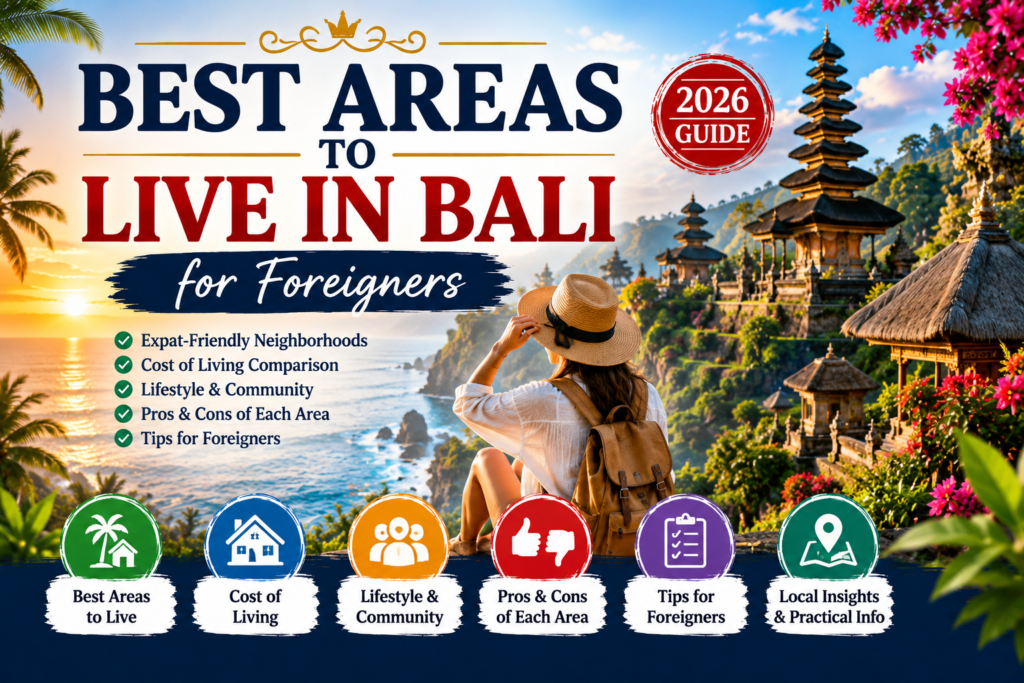
Bali remains one of the most popular destinations in the world for expats, digital nomads, retirees, and remote workers. Every year, thousands of foreigners move to the island in search of a better lifestyle, tropical weather, affordable living costs, and a vibrant international community.
However, Bali is not a one‑size‑fits‑all destination. Each area offers a unique lifestyle — from beachside coworking hubs to peaceful cultural retreats. This 2026 guide to the best areas to live in Bali for foreigners compares each location based on lifestyle, cost of living, amenities, internet quality, and expat community.
Table of Contents
Overview of Living in Bali as a Foreigner
Living in Bali offers a balance of affordability, comfort, and cultural richness. Foreigners can live comfortably on USD 1,200 – 2,500 per month, depending on lifestyle and location.
Visa Options for Long‑Term Stay:
- Visa on Arrival (VOA): 30 days, extendable once.
- Social‑Cultural Visa: Up to 6 months.
- KITAS (Temporary Stay Permit): For retirees, workers, or investors.
For me visa related information, please visit the official immigration website https://evisa.imigrasi.go.id/
Bali’s expat population continues to grow, with communities thriving in Canggu, Ubud, Sanur, and Seminyak. The island’s combination of natural beauty, modern amenities, and friendly locals makes it one of the best places to live in Southeast Asia.
Factors to Consider Before Choosing Where to Live in Bali
1. Lifestyle
Decide whether you prefer beaches or rice fields, nightlife or tranquility, coworking spaces or family‑friendly areas.
2. Budget
Rental prices vary widely. Canggu and Seminyak are more expensive than Ubud or Sanur.
3. Transportation
Traffic congestion is common in Canggu and Seminyak. Ubud and Sanur are easier to navigate.
4. Community
Some areas have large international communities, while others remain more traditional and local.
Canggu – Best for Digital Nomads and Young Expats
Canggu is Bali’s digital‑nomad capital, filled with coworking spaces, cafes, gyms, beach clubs, and a thriving expat community. Neighborhoods like Berawa, Batu Bolong, and Pererenan are the most popular.
Pros
- Large international community
- Excellent coworking spaces (Dojo Bali, Outpost, Tropical Nomad)
- Great cafes and restaurants
- Vibrant social scene and nightlife
- Reliable internet (50–100 Mbps)
Cons
- Heavy traffic congestion
- Rising rental prices
- Crowded during peak season
Typical Monthly Budget
- Budget lifestyle: USD 800 – 1,200
- Comfortable lifestyle: USD 1,500 – 2,500 +
Ideal For Digital nomads, remote workers, entrepreneurs, young professionals
Ubud – Best for Nature and Wellness
Located in central Bali, Ubud is known for its rice fields, yoga studios, wellness retreats, and artistic atmosphere. It’s ideal for those seeking peace and cultural immersion.
Pros
- Beautiful natural surroundings
- Cooler temperatures
- Wellness and yoga community (Hubud, Outpost Ubud)
- Peaceful atmosphere
- Rich Balinese culture
Cons
- No beaches
- Crowded in tourist season
- Limited nightlife
Typical Monthly Budget
- Budget lifestyle: USD 700 – 1,100
- Comfortable lifestyle: USD 1,300 – 2,000
Ideal For Families, retirees, writers, artists, wellness enthusiasts
Sanur – Best for Families and Retirees
Sanur is one of Bali’s oldest expat communities, offering a calm, family‑friendly environment with international schools and hospitals. The beachfront promenade is perfect for morning walks and cycling.
Pros
- Family‑friendly atmosphere
- Calm beaches and promenade
- Excellent healthcare facilities (Kasih Ibu Hospital, BIMC Clinic)
- Less traffic
- Established expat community
Cons
- Limited nightlife
- Fewer coworking spaces
Typical Monthly Budget
- Budget lifestyle: USD 800 – 1,200
- Comfortable lifestyle: USD 1,400 – 2,200
Ideal For Families, retirees, long‑term residents
Uluwatu – Best for Surfers and Scenic Living
Uluwatu, on the Bukit Peninsula, is famous for its cliffs, surf breaks, and relaxed vibe — perfect for those seeking peace and ocean views.
Pros
- Stunning scenery and sunsets
- Great surf beaches (Padang Padang, Bingin, Dreamland)
- Less crowded than Canggu
- Relaxed atmosphere
Cons
- Limited public transportation
- Fewer supermarkets and services
- Requires scooter or car
Typical Monthly Budget
- Budget lifestyle: USD 800 – 1,300
- Comfortable lifestyle: USD 1,500 – 2,500
Ideal For Surfers, couples, nature lovers
Seminyak – Best for Luxury Lifestyle
Seminyak is Bali’s upscale hub, known for luxury villas, beach clubs, fine dining, and shopping. It’s ideal for those who enjoy a cosmopolitan lifestyle.
Pros
- Luxury living and beach access
- Excellent restaurants and cafes (Potato Head, Ku De Ta)
- Shopping and nightlife
- Central location
Cons
- Expensive rentals
- Traffic congestion
- Busy tourist area
Typical Monthly Budget
- Budget lifestyle: USD 1,000 +
- Comfortable lifestyle: USD 2,000 – 4,000 +
Ideal For Luxury travelers, entrepreneurs, high‑income expats
Jimbaran – Best Overall Balance
Jimbaran offers a balanced lifestyle with beaches, family‑friendly neighborhoods, international schools, and proximity to the airport. It’s quieter than Canggu and Seminyak but still well‑connected.
Pros
- Close to airport (15 minutes)
- Family‑friendly environment
- Good infrastructure
- Beautiful beaches and seafood restaurants
Cons
- Smaller expat community
- Limited nightlife
Typical Monthly Budget
- Budget lifestyle: USD 800 – 1,300
- Comfortable lifestyle: USD 1,500 – 2,500
Ideal For Families, long‑term expats, couples
Internet and Coworking Spaces in Bali
Bali offers reliable internet, especially in Canggu, Seminyak, and Ubud. Average speeds range from 30 to 100 Mbps.
Top Coworking Spaces:
- Canggu: Dojo Bali, Tropical Nomad, Outpost Canggu
- Ubud: Hubud, Outpost Ubud
- Seminyak: Biliq Coworking
- Sanur: Livit Hub
Monthly memberships cost IDR 1.5 – 3 million (USD 100 – 200).
Healthcare and Safety by Area
Bali has several international‑standard hospitals and clinics.
Recommended Hospitals:
- BIMC Hospital (Kuta, Nusa Dua)
- Siloam Hospitals (Denpasar)
- Kasih Ibu Hospital (Sanur)
Private healthcare is affordable, and insurance is recommended. Bali is generally safe, but always wear helmets, avoid unlicensed taxis, and secure valuables.
Transportation and Accessibility
Scooters are the most common mode of transport. Rentals cost IDR 1.5 – 2.5 million (USD 100 – 160) per month.
Ride‑Hailing Apps: Grab and Gojek are widely available.
Airport Access: Jimbaran and Seminyak are closest to Ngurah Rai Airport.
Traffic Tips: Avoid rush hours (8–10 AM and 4–6 PM).
For detailed guidance, see How to Rent a Scooter in Bali Safely (2026 Foreigner Guide).
Education for Families
Bali offers several international schools with English‑language curricula.
| School | Location | Annual Tuition (USD) |
|---|---|---|
| Green School Bali | Ubud | 10,000 – 25,000 |
| Canggu Community School | Canggu | 8,000 – 18,000 |
| Bali Island School | Sanur | 7,000 – 15,000 |
| Australian Independent School | Denpasar | 6,000 – 12,000 |
Comparison Table
| Area | Best For | Cost | Nightlife | Expat Community |
|---|---|---|---|---|
| Canggu | Digital Nomads | High | Excellent | Very Large |
| Ubud | Nature & Wellness | Medium | Limited | Large |
| Sanur | Families & Retirees | Medium | Low | Large |
| Uluwatu | Surfers | Medium | Moderate | Growing |
| Seminyak | Luxury Lifestyle | High | Excellent | Large |
| Jimbaran | Families | Medium | Moderate | Medium |
Which Area Should You Choose?
- Choose Canggu if you work remotely and enjoy a vibrant social scene.
- Choose Ubud if you prefer nature, wellness, and a peaceful environment.
- Choose Sanur if you are moving with family or planning to retire.
- Choose Uluwatu if you love surfing and quiet living.
- Choose Seminyak if you want luxury living and nightlife.
- Choose Jimbaran if you want a balanced lifestyle with easy airport access.
Related Guides
- Cost of Living in Bali (2026 Complete Foreigner Guide)
- Indonesia Visa on Arrival (VOA) Guide for Foreigners
- Scams to Avoid in Indonesia (2026 Foreigner Safety Guide)
- Before Arrival to Indonesia: Complete Foreigner Guide (2026)
Frequently Asked Questions (FAQ)
1. Is Canggu or Ubud better for expats?
Canggu is better for digital nomads and social life, while Ubud is ideal for nature and wellness.
2. What is the cheapest area to live in Bali?
Northern Bali and some parts of Ubud are more affordable than tourist centers.
3. Where do most foreigners live in Bali?
Most foreigners live in Canggu, Sanur, Ubud, Seminyak, and Uluwatu.
4. Is Bali a good place to retire?
Yes. Bali offers a warm climate, affordable living, and strong expat communities.
5. Do I need a visa to live in Bali long‑term?
Yes. Foreigners can apply for a Social‑Cultural Visa or Retirement KITAS.
6. Is Bali safe for foreigners?
Yes, Bali is generally safe, but take standard precautions and avoid unlicensed transport.
7. Can I drive in Bali with a foreign license?
Yes, with an International Driving Permit (IDP). Always wear a helmet.
8. Which area has the best internet connection?
Canggu and Seminyak offer the fastest internet (50–100 Mbps).
9. Are there international schools in Bali?
Yes, in Canggu, Sanur, and Ubud, with tuition ranging from USD 6,000 to 25,000 per year.
10. Can foreigners buy property in Bali?
No, foreigners can lease property long‑term but not own land directly.
Final Thoughts
There is no single “best” area to live in Bali for foreigners. The ideal location depends on lifestyle, budget, and personal preferences.
For digital nomads, Canggu remains the top choice. Families and retirees often prefer Sanur, while those seeking peace and nature may find Ubud or Uluwatu more appealing. Seminyak offers luxury living, and Jimbaran provides a balanced lifestyle close to the airport.
Before signing a long‑term lease, spend a few weeks in different areas to experience each neighborhood firsthand and find the perfect place to call home in Bali.
To explore more, Visit the YouTube Channel Living Indonesia Official – YouTube
Book cheap flights, hotels ferries, trains, taxi at 12GO