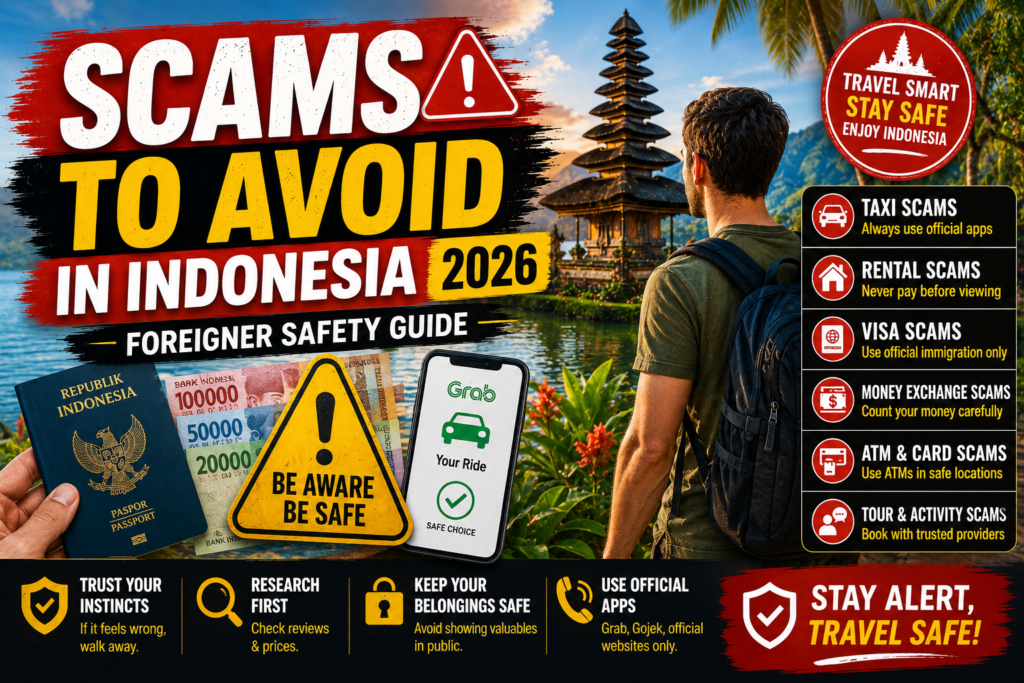
The scams to avoid in Indonesia are often simple tricks that target tourists unfamiliar with local customs. This 2026 foreigner safety guide explains the most common scams in Indonesia, how to recognize them, and practical tips to stay safe while traveling across the country.
Table of Contents
Overview of Scams to Avoid in Indonesia
Indonesia is generally safe for travelers, but petty scams and overcharging are common in tourist hotspots such as Bali, Jakarta, Yogyakarta, and Lombok. Most scams to avoid in Indonesia are non-violent and rely on confusion, distraction, or misinformation.
Understanding these scams helps travelers avoid unnecessary losses and enjoy a stress-free trip.
Common Scams to Avoid in Indonesia for Tourists
Scams to avoid in Indonesia often target new arrivals unfamiliar with local customs or currency. The most common include:
- Taxi overcharging
- Fake money changers
- Tour package fraud
- Motorbike rental damage claims
- ATM skimming
- Online booking scams
- Street donation or “charity” scams
Taxi and Transport Scams to Avoid in Indonesia
1. Overcharging by Unmetered Taxis
Some taxi drivers refuse to use the meter and quote inflated prices, especially at airports or tourist areas.
How to avoid:
- Use reputable apps like Bluebird, Grab, or Gojek.
- Confirm the fare before starting the trip.
- Avoid drivers who approach aggressively at terminals.
2. Fake Taxi Apps or Impersonators
Scammers may pose as drivers from popular ride-hailing apps.
How to avoid:
- Verify the driver’s name, plate number, and photo in the app.
- Never share personal details or pay outside the app.
Money Exchange and ATM Scams to Avoid in Indonesia
1. Fake Money Changers
Unauthorized money changers may offer high rates but shortchange customers or use sleight of hand.
How to avoid:
- Exchange money only at authorized money changers or banks.
- Count cash carefully before leaving the counter.
- Avoid small kiosks in tourist areas.
2. ATM Skimming
Hidden card readers or cameras can steal card data.
How to avoid:
- Use ATMs inside banks or shopping malls.
- Cover the keypad when entering your PIN.
- Check for unusual attachments on the card slot.
Fake Tour and Ticket Scams to Avoid in Indonesia
Fraudulent tour operators or online sellers may offer cheap packages or tickets that don’t exist.
How to avoid:
- Book tours through licensed agencies or official websites.
- Check reviews on Google Maps or TripAdvisor.
- Avoid paying full price upfront to unknown sellers.
Motorbike Rental and Damage Scams to Avoid in Indonesia
Some rental shops claim fake damages after the bike is returned, demanding large payments.
How to avoid:
- Take photos and videos of the bike before renting.
- Choose reputable rental companies with clear contracts.
- Avoid leaving your passport as collateral; use a copy instead.
Street and Market Scams to Avoid in Indonesia
1. Overpriced Souvenirs
Vendors may quote inflated prices to foreigners.
How to avoid:
- Bargain politely and compare prices at multiple stalls.
- Learn basic Indonesian phrases for negotiation.
2. Fake Charity or Donation Scams
Scammers may approach tourists asking for donations for fake causes.
How to avoid:
- Politely decline street donations.
- Donate only through verified organizations.
Online and Digital Scams to Avoid in Indonesia
1. Fake Accommodation Listings
Fraudsters create fake listings on social media or unofficial websites.
How to avoid:
- Book through trusted platforms like Booking.com or Airbnb.
- Verify property reviews and contact details.
2. Romance or Investment Scams
Online scammers may build trust before requesting money transfers.
How to avoid:
- Never send money to people met online.
- Report suspicious accounts immediately.
How to Report Scams in Indonesia
If scammed, report the incident to local authorities or your embassy.
Useful contacts:
- Tourist Police (Bali): +62 361 224111
- National Police (POLRI): 110 (nationwide)
- Immigration Hotline: +62 21 5224658
- Consumer Protection Agency: +62 21 3451692
Keep copies of receipts, screenshots, and communication records as evidence.
Safety Tips for Foreigners in Indonesia
- Stay alert in crowded areas and tourist zones.
- Avoid sharing personal details with strangers.
- Use official apps for transport and bookings.
- Keep valuables secure and avoid displaying cash.
- Trust your instincts — if something feels off, walk away.
For more travel advice, read the Indonesia Visa on Arrival Guide and How to Extend Indonesia Tourist eVisa C1.
Frequently Asked Questions (FAQ)
1. What are the top scams to avoid in Indonesia in 2026?
The most common scams to avoid in Indonesia include taxi overcharging, fake money changers, and online booking fraud.
2. Is Indonesia safe for tourists in 2026?
Yes. Indonesia is generally safe, but travelers should stay cautious of petty scams.
3. Are scams common in Bali?
Yes, especially taxi overcharging and fake money changers in tourist areas.
4. What should I do if I get scammed?
Report to the tourist police or your embassy immediately.
5. Can I use credit cards safely in Indonesia?
Yes, but use them only at reputable establishments and avoid public Wi-Fi for transactions.
6. How can I identify a fake money changer?
They often operate in small kiosks, offer unusually high rates, and avoid giving receipts.
7. Is it safe to rent motorbikes in Bali?
Yes, if using reputable rental companies and documenting the bike’s condition.
Final Thoughts
Indonesia remains one of the most beautiful and friendly countries to visit, but awareness is key to staying safe. By understanding the scams to avoid in Indonesia and following basic precautions, travelers can enjoy Indonesia’s culture, nature, and hospitality without worry.
To explore more, Visit the YouTube Channel Living Indonesia Official – YouTube
Book cheap flights, hotels ferries, trains, taxi at 12GO