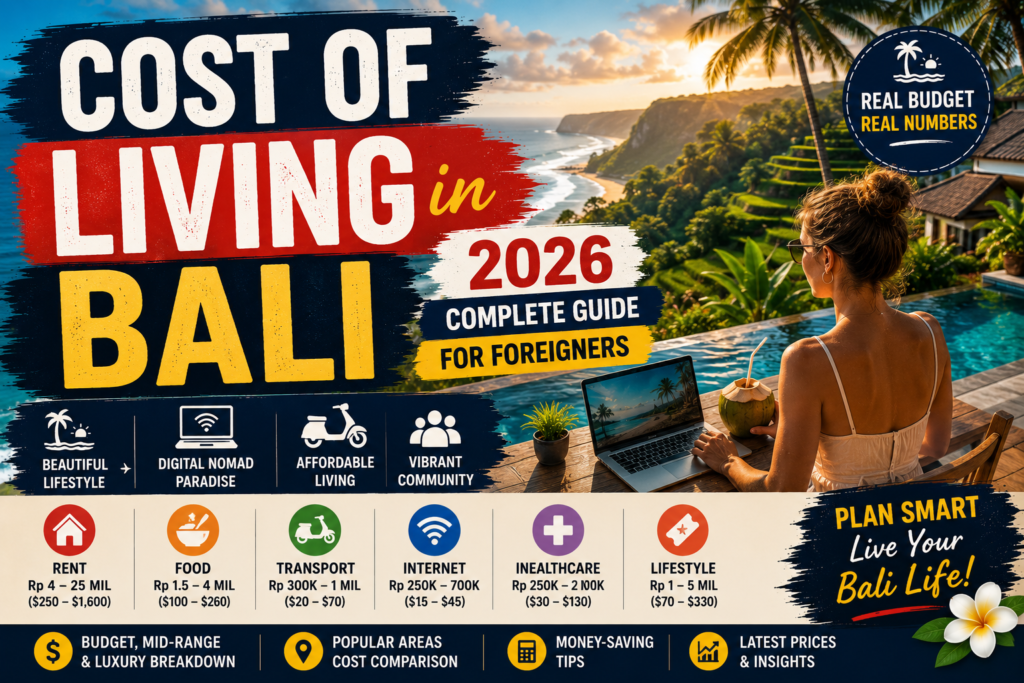
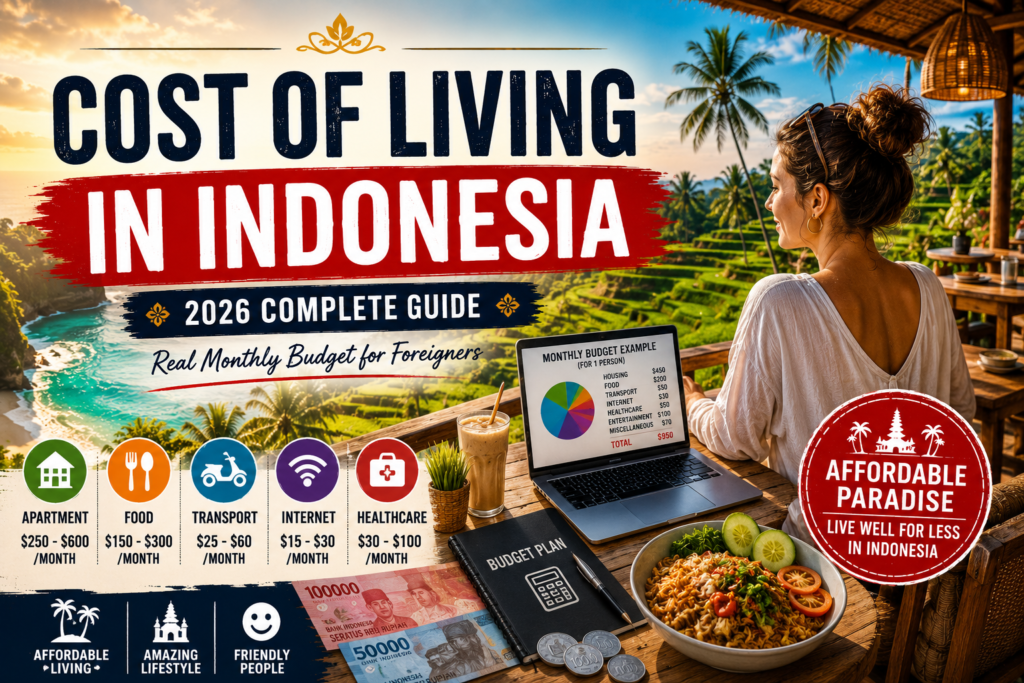
Understanding the cost of living in Indonesia is essential for anyone planning to move, work, or retire in the country. This 2026 complete foreigner guide breaks down expenses for housing, food, transportation, healthcare, and lifestyle across major cities like Bali, Jakarta, Yogyakarta, and Surabaya.
Table of Contents
Overview of the Cost of Living in Indonesia
The cost of living in Indonesia is significantly lower than in most Western countries, making it a popular destination for digital nomads, retirees, and expatriates. While Jakarta and Bali are more expensive, smaller cities like Yogyakarta and Bandung offer affordable lifestyles without sacrificing comfort.
On average, a single foreigner can live comfortably in Indonesia for USD 800–1,500 per month, depending on location and lifestyle.
Average Monthly Expenses for Foreigners
| Category | Average Monthly Cost (USD) | Notes |
|---|---|---|
| Accommodation | $300–800 | Varies by city and housing type |
| Food & Dining | $200–400 | Local food is very affordable |
| Transportation | $50–150 | Motorbike or ride-hailing apps |
| Utilities & Internet | $50–100 | Electricity, water, Wi-Fi |
| Healthcare & Insurance | $50–150 | Basic coverage or private insurance |
| Entertainment & Leisure | $100–300 | Dining out, gyms, nightlife |
| Total (Single Foreigner) | $800–1,500 | Comfortable lifestyle |
Accommodation Costs in Indonesia
Housing is one of the biggest factors in the cost of living in Indonesia. Prices vary widely between cities and regions.
Average monthly rent:
- Jakarta: $400–1,000 (apartments or condos)
- Bali: $300–800 (villas or guesthouses)
- Yogyakarta: $200–500 (houses or kosts)
- Surabaya: $250–600 (apartments or houses)
Tips:
- Long-term rentals are cheaper than short stays.
- Use platforms like Airbnb, Traveloka, or Facebook expat groups to find housing.
- Always inspect the property before signing a lease.
Food and Dining Costs
Food is one of the most affordable aspects of the cost of living in Indonesia.
Average meal prices:
- Local warung (street food): $1–2 per meal
- Mid-range restaurant: $5–10 per meal
- Western restaurant: $10–20 per meal
- Coffee: $1.50–3
- Beer: $2–4
Cooking at home is cheaper, with groceries costing around $150–250 per month for one person. Local markets offer fresh produce at low prices.
Transportation Costs
Getting around is easy and inexpensive.
Average monthly transport costs:
- Motorbike rental: $60–100
- Fuel: $1 per liter
- Grab/Gojek rides: $1–5 per trip
- Public buses: $0.30–1 per ride
- Domestic flights: $30–100 (depending on route)
For detailed transport options, read the Travel in Indonesia Guide.
Utilities and Internet Costs
Utilities are affordable and reliable in most urban areas.
Average monthly costs:
- Electricity: $30–60
- Water: $5–10
- Internet (fiber): $20–40
- Mobile data: $5–10
Providers like IndiHome, Biznet, and First Media offer high-speed internet in major cities.
Healthcare and Insurance Costs
Healthcare quality varies by region. Major cities have excellent private hospitals, while rural areas may have limited facilities.
Average healthcare costs:
- Doctor consultation: $10–25
- Dental cleaning: $20–40
- Hospital stay (private): $50–150 per night
- Health insurance: $50–150 per month
Recommended hospitals include Siloam, RS Premier, and BIMC Bali. Always carry travel insurance before arrival.
Education and Childcare Costs
For families, education is an important part of the cost of living in Indonesia.
Average monthly tuition:
- Local schools: $50–150
- International schools: $500–2,000
- Preschool/Daycare: $100–300
Popular international schools include Jakarta Intercultural School (JIS), Bali Island School, and Surabaya European School.
Entertainment and Lifestyle Costs
Indonesia offers a vibrant lifestyle with plenty of entertainment options.
Average monthly leisure costs:
- Gym membership: $20–50
- Cinema ticket: $3–5
- Night out (dinner + drinks): $20–50
- Weekend trip (domestic): $100–200
Bali and Jakarta have the most active nightlife scenes, while Yogyakarta and Bandung are known for cultural events and live music.
Living Costs by City
| City | Average Monthly Cost (USD) | Lifestyle Notes |
|---|---|---|
| Jakarta | $1,200–2,000 | Modern city life, higher rent |
| Bali | $1,000–1,800 | Tourist-friendly, beach lifestyle |
| Yogyakarta | $700–1,200 | Affordable, cultural hub |
| Surabaya | $800–1,300 | Business city, good infrastructure |
| Bandung | $700–1,100 | Cool climate, student city |
Saving Tips for Foreigners in Indonesia
- Eat local: Warungs and street food are cheap and delicious.
- Negotiate rent: Long-term leases often include discounts.
- Use ride-hailing apps: Grab and Gojek are cheaper than taxis.
- Shop at local markets: Fresh produce costs less than supermarkets.
- Avoid tourist traps: Prices in tourist zones are inflated.
For safety and scam awareness, read the Scams to Avoid in Indonesia Guide.
Related Guides
Frequently Asked Questions (FAQ)
1. Is the cost of living in Indonesia cheap?
Yes, compared to Western countries, the cost of living in Indonesia is very affordable.
2. How much money do I need to live comfortably in Indonesia?
A single person can live comfortably on $800–1,500 per month, depending on location.
3. Is Bali more expensive than Jakarta?
In general, Bali is slightly cheaper for accommodation but more expensive for dining and entertainment.
4. Can foreigners buy property in Indonesia?
Foreigners can lease property long-term but cannot directly own freehold land.
5. How much does healthcare cost in Indonesia?
Basic healthcare is affordable, but private hospitals and insurance are recommended for foreigners.
6. What is the average salary in Indonesia?
The average local salary is around $300–500 per month, much lower than expat income levels.
Final Thoughts
The cost of living in Indonesia remains one of the biggest attractions for foreigners. Whether living in Bali’s beach towns, Jakarta’s modern districts, or Yogyakarta’s cultural heart, Indonesia offers a comfortable lifestyle at a fraction of Western costs. With smart budgeting and local know-how, living in Indonesia can be both affordable and rewarding.
To explore more, Visit the YouTube Channel Living Indonesia Official – YouTube